
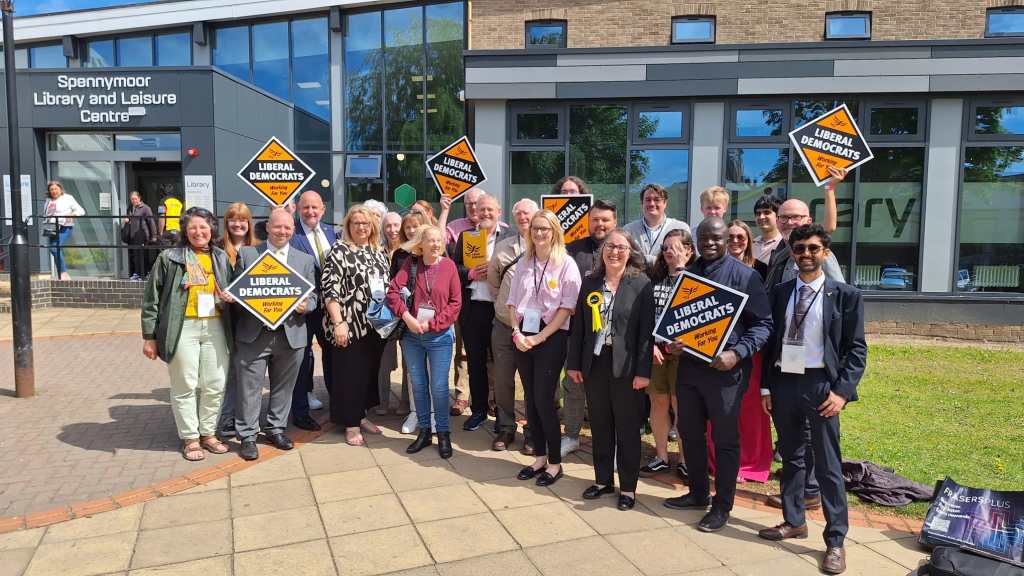
Yesterday I was able to speak against the appeal into the Rockcliffe Incinerator Planning Permission. (IE speaking against the application!)
Here is the speech:
Rockcliffe Gasification Plant — Planning Inspector’s Appeal
Cllr Tim Pickstone — Oral Representation
Inspector, thank you for the opportunity to speak.
My name is Tim Pickstone. I am the elected councillor for Longtown Ward on Cumberland Council — the ward that includes Rockcliffe — and I appear today to support the Council’s decision to refuse this application.
I think the most useful thing I can contribute to this hearing is to tell you briefly about my experience of being a councillor for this area and how that relates to the planning decision and appeal in front of you.
I have been lucky enough to represent Longtown Ward both on Cumberland Council and prior to LGR as a Carlisle City Councillor. It is the last ward in England, the first if you’re coming the other way. To give you a bit of context on just how rural the area is, it is 4,000 electors spread over a ward which, by area, is larger than the City of Birmingham.
Within that context, Rockcliffe Parish has seen in recent years a significant growth in the waste and energy sector. The Hespin Wood Waste Management Park is to the north of the village, a massively enlarged Harker Substation is to the east and there are multiple battery storage and solar farm proposals, pre-application stages of a tyre pyrolysis plant to the south east and of course this application for a plastics gasification plant to the immediate south. No rational waste and energy strategy would identify one small village north of Carlisle for five or six major schemes. The cumulative weight of these consents is simply too great for one small rural community to bear, and the Council’s refusal was right to identify that cumulative impact on health has not been sufficiently addressed.
It is probably useful to tell you about my direct experience of being the councillor for Rockcliffe. In my role as ward councillor, I regularly receive complaints from residents about the existing waste operations at this site. Those complaints cover noise, site management, operations outside of approved hours, and plastic waste coming off lorries into hedgerows and fields. In the week that the planning application was considered, I was in receipt of a further complaint about hours of operation from previous planning permissions being disregarded.
I raise this not to relitigate enforcement matters, but because it is directly material to this appeal. If existing planning conditions are not being adhered to, the Inspector must weigh very carefully how much confidence can realistically be placed in the conditions and mitigation measures proposed for this new and more complex facility.
Finally, if I may, I want to address the impact of the proposed plant on health and environment, and I would very much agree with the Planning Committee’s decision to turn down this planning permission on these grounds.
The Royal College of Physicians has reported that 500 people in the UK die every day from poor air quality. Air pollution is cumulative — and here we are asked to add another continuous emissions source, burning synthetic gas around the clock, releasing dioxins and other pollutants, in a location immediately adjacent to the Solway Coast National Landscape, the internationally designated upper Solway Firth, and within 500 metres of the River Eden — a Site of Special Scientific Interest and major ecological corridor.
The 2021 fire at this site, when 400 tonnes of plastic burned for weeks, is instructive. Firefighters scaled back their response because of the very real risk of an environmental catastrophe in the Eden. That incident — and residents’ ongoing concerns since — should inform the Inspector’s assessment of the risks posed by an even more complex operation on the same site.
Only last week, a BBC investigation found evidence of toxic pollution at Demesne Marsh — a protected beauty spot on the banks of the River Eden in Cumbria, and a Site of Special Scientific Interest. A materials expert who visited the site reported untreated construction waste in an embankment there, with soil sample tests suggesting high levels of lead.
Inspector, the Council’s reasons for refusal are well-founded and robust. The applicant has not demonstrated that the combined impacts of this proposal on health, amenity, and the environment can be adequately controlled. I urge the Inspector to dismiss this appeal.
Thank you.


Leave a Reply